THE EMBER FIELD GUIDE
What lies beneath.
A beautiful setting is only part of the picture.
01 / SOILS & SEPTIC
Good ground.
More than meets the eye.
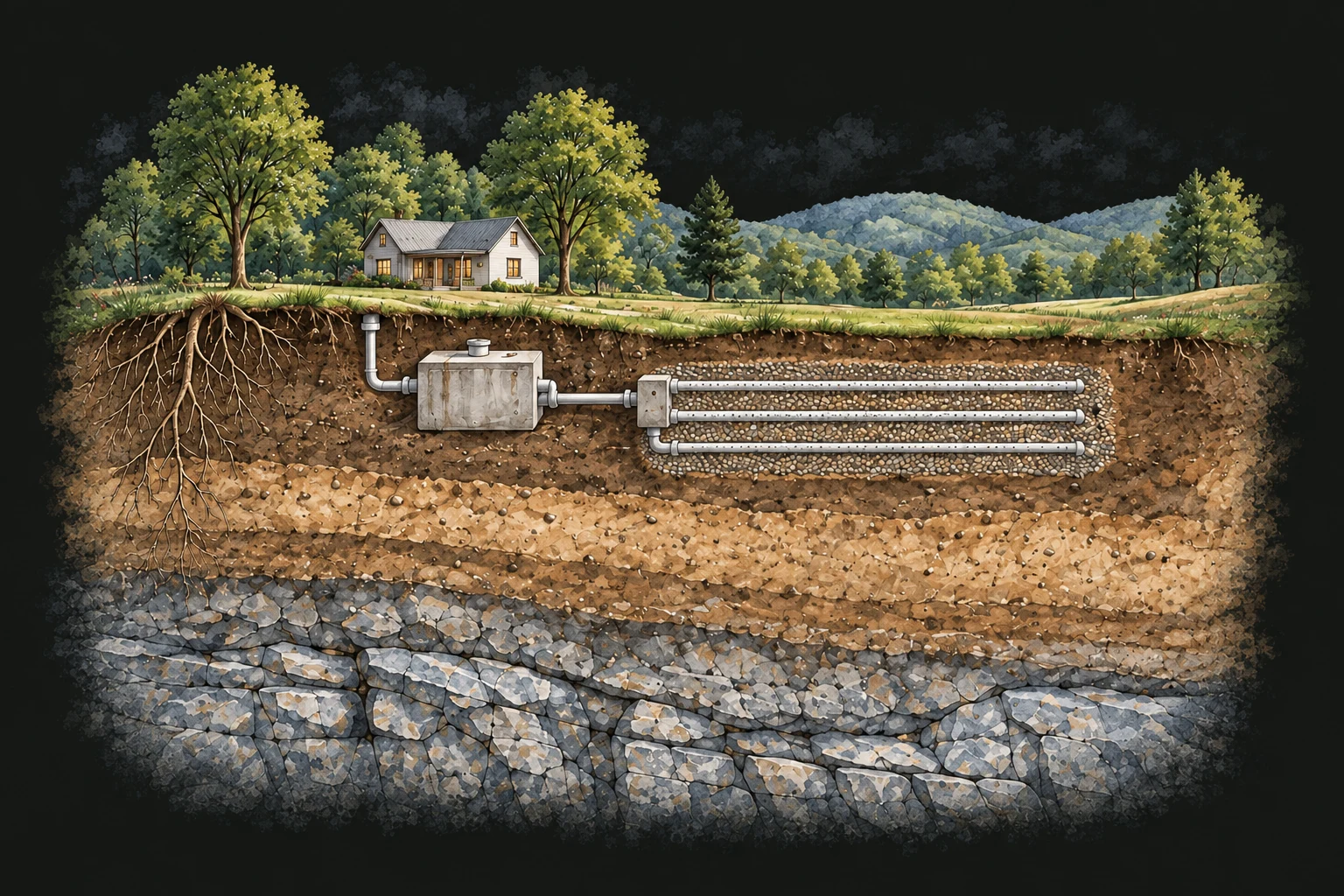
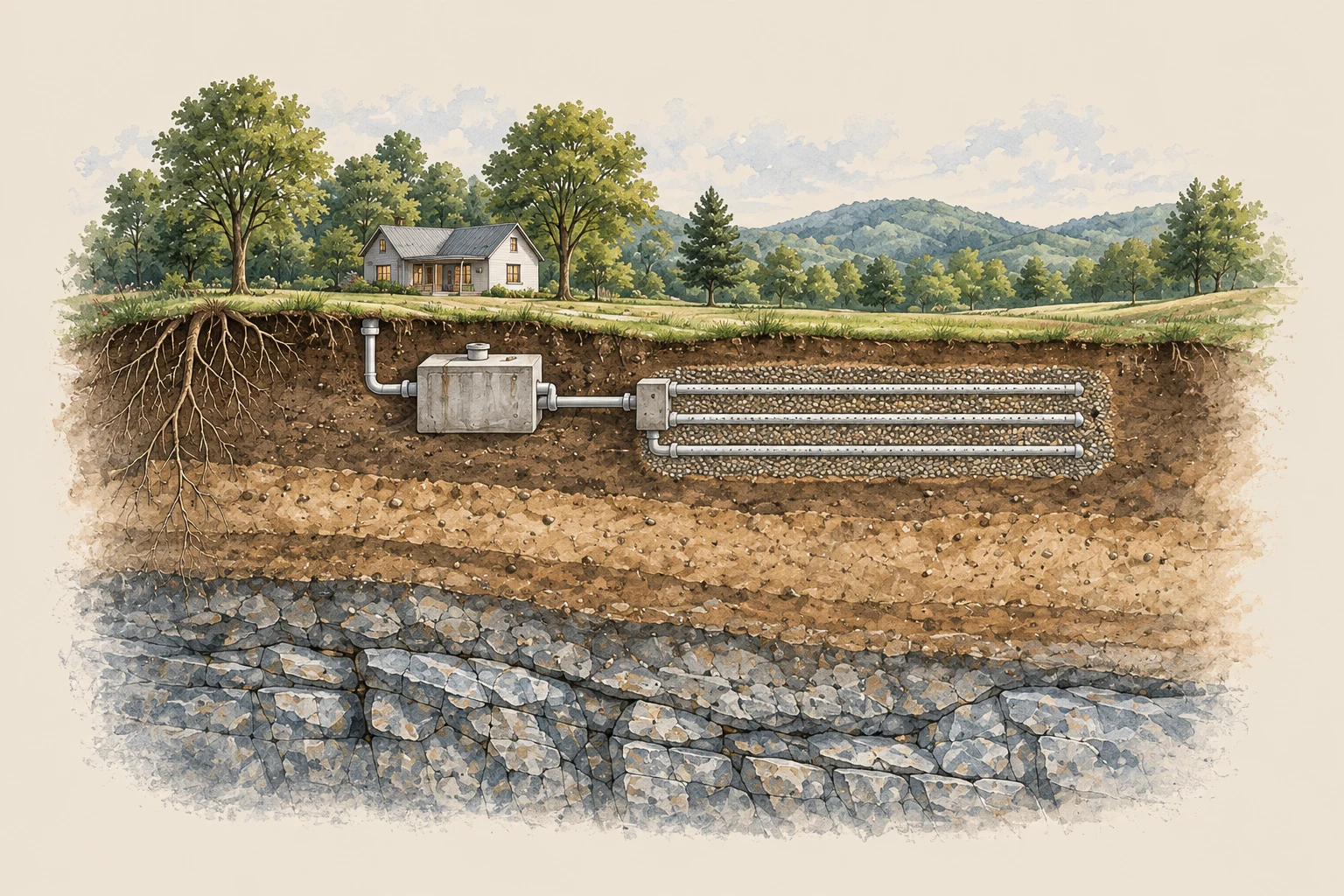
When a property isn't served by public sewer, wastewater needs to be treated on site. The soil is part of that treatment system, not simply a place for water to disappear.
- 01
The tank separates.
Wastewater leaves the home and enters a buried tank, where solids settle and oils rise. The liquid continues to the drainfield.
- 02
The soil does work.
A conventional drainfield distributes that liquid into suitable, unsaturated soil, which helps treat and disperse it.
- 03
The setting matters.
Soil characteristics, slope, seasonal wetness, and depth to bedrock help determine what kind of system a site can support.
WHY EXPERTISE MATTERS
A clearing isn't
a confirmation.
A qualified soil professional evaluates what a walk through the woods cannot reveal. Their findings inform the site plan and permitting process. A soil map, a proposed system, and an issued permit are different milestones.
Does good drainage mean good septic soils?
Not by itself. Suitable soils need to accept and treat wastewater. Texture, structure, wetness, depth, and the surrounding site all matter; surface appearance is not a substitute for evaluation.
Does a soil evaluation mean I can build anywhere?
No. Findings relate to specific areas and site conditions. The home, septic area, access, and other constraints need to work together. Confirm the approved plan and any remaining requirements with the responsible professionals and permitting authority.
What if a conventional system will not work?
An alternative system may be possible, depending on the site and approval requirements. It can involve different construction, maintenance, and costs. Possibility is not the same as an approved solution.
Further reading: EPA: How septic systems work · Tennessee: Septic services & evaluation
02 / WATER & WELLS
Where your water
comes from.
A rural address doesn't automatically mean a private well. Start by confirming whether public water can serve the specific property, what connection requires, and what remains to be arranged.
WHEN A WELL IS THE PATH
A source, not
a certainty.
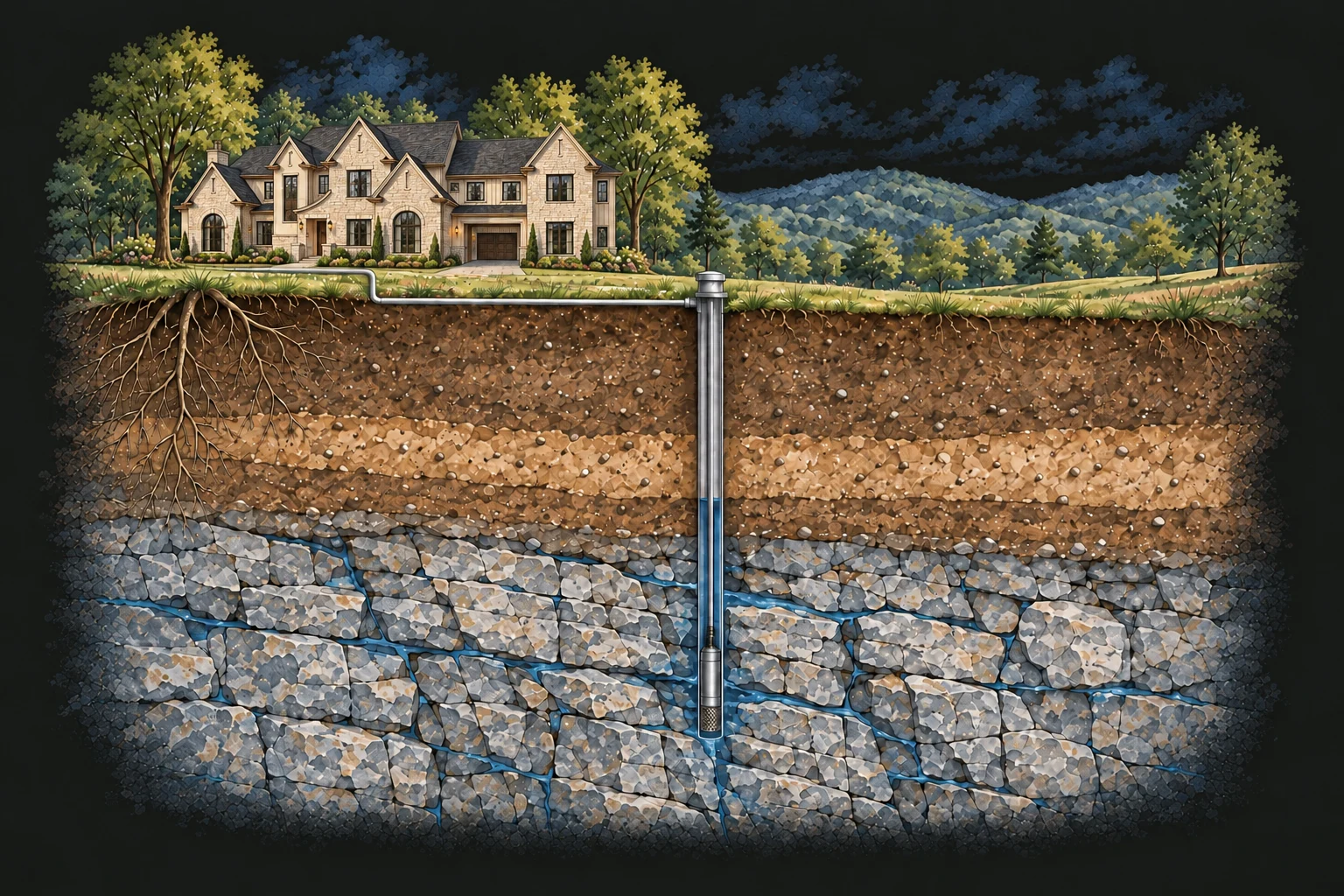
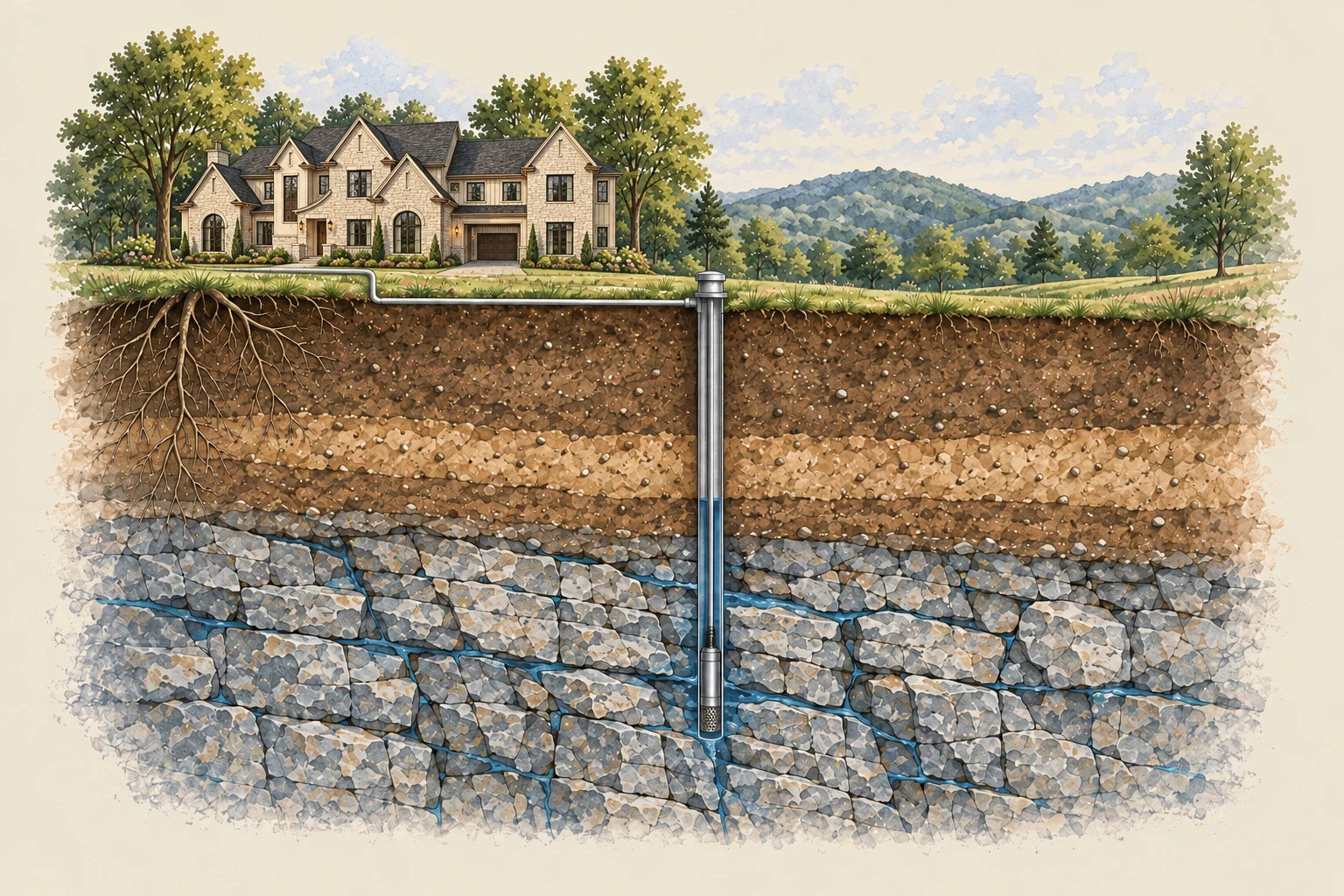
A licensed driller creates a borehole to reach groundwater. Casing and sealing protect the well; a pump brings water to the home. The depth, supply, equipment, and cost depend on the site. Drilling is an investment before the outcome is fully known.
Availability
What are the prospects for water here? Nearby wells provide context, not a guarantee for this site.
Quantity
Finding water is one milestone. Understanding the well's yield and how the system will meet household demand is another.
Quality
Clear-looking water isn't a test result. Laboratory testing helps identify concerns and whether treatment is needed.
Does drilling deeper guarantee a better well?
No. Groundwater availability varies with local geology. Depth alone does not establish a dependable supply or water quality. A licensed driller can explain the prospects and uncertainties for the site.
Is well water automatically unsafe?
No. A well can serve a home, but its construction, testing, protection, and ongoing care matter. Neither appearance nor the word "natural" establishes water quality.
Once a well is installed, is the work finished?
A private water system needs ongoing attention. Keep the driller's report, understand the equipment and any treatment, and follow professional testing and maintenance recommendations. EPA recommends annual testing for several basic indicators, with additional testing as circumstances warrant.
Further reading: Tennessee: Well water · EPA: Protect your home's water
THE EMBER DIFFERENCE
You don't need to
become a land expert.
You deserve to understand what you're buying. Ember brings the research, vision, and groundwork together, with a clear distinction between what's confirmed, what's proposed, and what still needs an answer.
Follow our next place